Life Stories
The Star Quarterback Took My Daughter to Prom — Then I Found His Secret

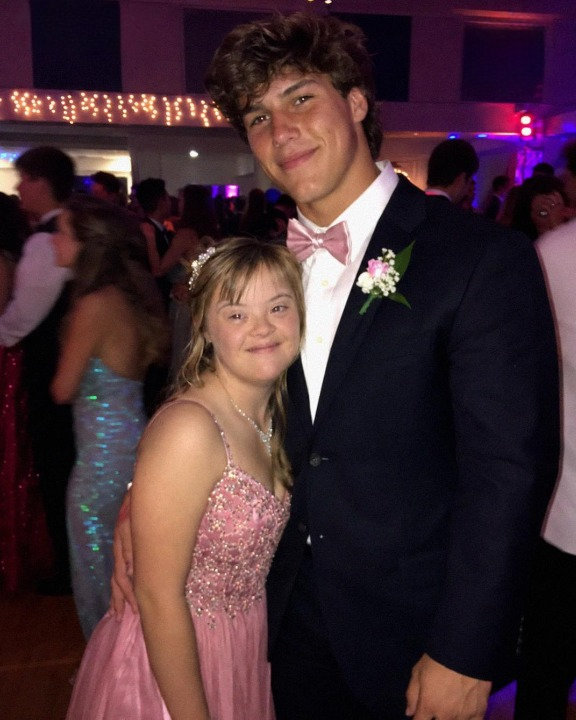
When the school’s star quarterback asked my daughter with Down syndrome to prom, I wanted to believe that, for once, kindness had found its way to her.
My daughter, Rosie, had spent years being overlooked, whispered about, and quietly hurt by people who never took the time to know her. She has mosaic Down syndrome, and while some people don’t notice it right away, they always seemed to notice just enough to make her feel different.
So when Steven showed up at our front door with a white tulip in his hand and asked Rosie to prom, my heart nearly stopped.
Rosie was standing in the kitchen at the time, practicing her dance steps in silver shoes that were two sizes too big.
“One-two-three, turn,” she kept whispering to herself, smiling like she was already there.
I looked at Steven, then at Rosie’s face, and before I could overthink it, I said yes.
For the next few weeks, my daughter lived in a kind of happiness I hadn’t seen in years. Every day, she practiced. Every day, she smiled. Every day, she counted her steps and imagined the moment she would finally get to be like everyone else.
And when prom night finally came, she looked radiant.
At the venue, Steven bowed in front of her and asked for a dance. Rosie lit up instantly. People around them smiled. Some even clapped as he led her onto the dance floor and moved with her gently, following her rhythm as she whispered her steps under her breath.
For one brief moment, I thought maybe I had been wrong to worry.
Then everything changed.
Steven had taken off his tuxedo jacket and left it on a chair near me. When I picked it up, I felt something heavy in one of the pockets.
At first, I thought it was just a phone or wallet.
But when I reached inside, I froze.
There was a flash drive.
There were printed photos of Rosie.
And there was a red envelope.
Across the front, in large letters, it said:
“AFTER THEY LAUGH.”
My stomach dropped.
My hands started shaking as I stared at the words, trying to make sense of what I was seeing. Before I could even turn around, Steven was suddenly right beside me.
He grabbed my wrist.
His voice was low. Calm. Cold.
“Don’t,” he said. “Stay quiet for your daughter’s sake.”
I looked across the room.
Rosie was smiling, completely unaware, still glowing in the middle of the happiest night of her life.
I wanted to scream. I wanted to drag her out of there. I wanted to demand answers right then and there.
Instead, I whispered through clenched teeth, “If this is some kind of joke, I swear—”
But Steven didn’t react.
He simply turned away, walked toward the stage, and took the microphone.
The music stopped.
The whole room went silent.
He plugged the flash drive into the sound system and looked out at the crowd.
“Everyone,” he said, “look up here.”
Panic rushed through me. I tried to move forward, but a few of his teammates stepped into my path — not aggressively, but just enough to keep me from reaching him in time.
Then the screen lit up.
And what I saw broke my heart.
Photo after photo of Rosie filled the screen.
Not embarrassing pictures.
Not cruel jokes.
Not a setup.
These were moments of pain.
Rosie sitting alone in the cafeteria while other kids laughed in the background. Rosie crying in a bathroom stall. Rosie clutching a torn jacket. Rosie standing by herself while everyone else looked away.
The room went completely still.
You could feel the air change.
And then Steven spoke again.
He told the crowd that for years, too many people had watched Rosie get humiliated, excluded, and treated like she didn’t matter. He said they had laughed, stayed silent, or pretended not to notice.
He said tonight wasn’t about pity.
It was about truth.
It was about showing everyone who Rosie really was — a kind, brave, beautiful girl who deserved the same joy, respect, and love as anyone else in that room.
Then he opened the red envelope.
Inside was not a joke.
It was a stack of handwritten notes.
One by one, students began coming forward. Some had written apologies. Some had written memories. Some simply wrote that Rosie mattered, that they were sorry, and that they wished they had done better.
By the time I looked back at my daughter, she was crying.
But this time, she wasn’t crying because she had been hurt.
She was crying because, for the first time, the room was finally seeing her.
Really seeing her.
And then Steven did something I will never forget.
He walked back to Rosie, held out his hand, and asked, in front of everyone:
“May I have this dance?”
The room erupted in applause.
Rosie nodded through tears and placed her hand in his.
As they danced, I stood there stunned — ashamed that I had assumed the worst, shaken by what I had found, and overwhelmed by what that boy had actually done.
What I thought was a cruel setup had turned into something else entirely.
A reckoning.
A confession.
A moment of truth.
That night didn’t just change the way I saw Steven.
It changed the way an entire room saw my daughter.
And long after the music ended, one thing stayed with me:
Sometimes the people we fear will break our children’s hearts are the very ones who help put the broken pieces back together.

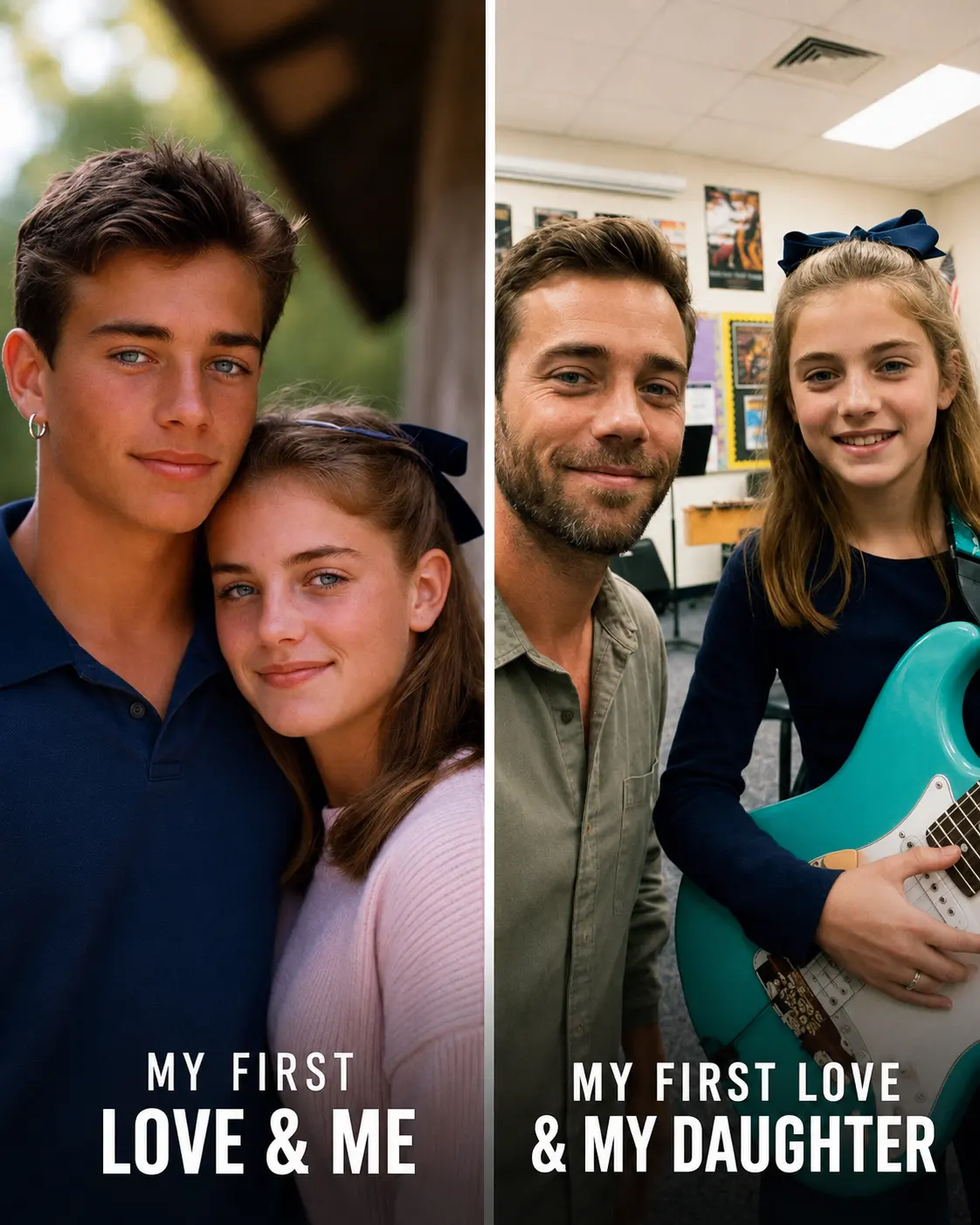
I Discovered My Daughter’s Music Teacher Was My First Love, Then I Learned Why He Was Desperate to Be Part of Her Life
The moment my daughter’s music teacher looked across the auditorium and met my eyes, the past came crashing back into my life.
I had convinced myself that part of my story had been buried forever.
I was wrong.
I’m 35 years old, and remembering what happened still makes my stomach turn.
Some memories never truly disappear.
They don’t become softer or less painful with time.
They remain buried beneath the surface, like a splinter you cannot reach, waiting for the slightest touch.
My husband, Callum, had died a year and a half before the school recital that changed everything.
One moment, he had been laughing at something silly on television.
The next, I was holding his face between my hands and desperately begging him to breathe.
…my husband had died a year and a half earlier…
His death had been sudden, cruel, and impossible to understand.
It was the kind of loss that didn’t simply break your heart.
It rearranged your entire existence.
After the funeral, I discovered what real silence sounded like.
It sounded like our kitchen without Callum humming while he cooked.
It sounded like his guitar sitting untouched in the living room.
Most painfully, it sounded like my daughter closing her bedroom door and refusing to come out unless she absolutely had to.
My daughter, Wren, was only 10 years old.
…I discovered what real silence sounded like.
Before losing her father, Wren had been confident, adventurous, and endlessly curious.
She used to race across playgrounds as though they belonged to her.
She made friends wherever she went, asked hundreds of questions, and talked so quickly that Callum often laughed and asked, “Does that child ever stop to breathe?”
After his death, all that light disappeared.
She turned inward and shut the rest of the world out.
There were no more birthday parties or afternoons with friends.
Her life became a quiet routine of school, home, and the safety of her bedroom.
…Wren had been confident, adventurous, and endlessly curious.
I tried everything I could think of to reach her.
I suggested movie nights, invited her to bake with me, and sometimes sat beside her and gently asked, “Do you want to talk about Dad?”
Every time, she shook her head and quietly replied, “I’m okay, Mom.”
But she wasn’t okay.
Music was the only thing that occasionally seemed capable of reaching through the fog surrounding her.
Callum had played the guitar for Wren every night after dinner.
It had been their special ritual.
“I’m okay, Mom.”
After his death, his guitar remained in the corner of the living room.
It leaned silently against the wall, almost as though it were waiting for him to walk through the door and pick it up again.
Wren had once loved running her fingers across its strings.
After the funeral, she could barely bring herself to look at it.
Then, one afternoon—about six months before her school recital—I heard music coming from upstairs.
It wasn’t meaningless strumming.
Someone was playing actual chords.
I stopped outside Wren’s bedroom with my hand hovering above the doorknob.
My heart was beating so hard that it felt as though it might bruise the inside of my chest.
Recently, she hadn’t even been able to look at the guitar.
I knocked softly before stepping into the room.
Wren froze the moment she saw me.
“It’s for school,” she quickly explained after noticing the shock on my face. “My music teacher, Mr. Heath, is helping me.”
Her small fingers remained wrapped around Callum’s guitar.
“You’re taking guitar lessons?” I asked.
She nodded without looking up from the strings.
“He said I could borrow an instrument from school,” she said. “But I wanted to use Dad’s.”
Hearing her say the word Dad almost shattered me.
“Does playing it make you sad?” I asked carefully.
She shook her head.
“It makes me feel like he’s close to me.”
It was the first time since the funeral that my daughter didn’t appear completely lost.
She had frozen the moment she saw me.
During the following weeks, I began noticing small changes in her.
At first, those changes filled me with relief.
Wren started humming as she walked through the hallway.
She smiled again.
Instead of locking herself inside her bedroom, she sometimes left the door slightly open.
She even asked whether she could remain at school after class for extra music practice.
“Mr. Heath understands,” she told me one evening as we cleared the dinner table. “He doesn’t act like I’m damaged.”
The word damaged echoed painfully inside my head.
…I began noticing small changes in her.
“What does he do differently?” I asked.
“He listens,” she answered. “When I make a mistake, he tells me mistakes are part of learning.”
I wanted to be grateful to him.
A part of me truly was.
Still, something about the situation made me uneasy.
It felt like a loose thread hanging from a piece of clothing—something small that I couldn’t stop noticing.
A week later, Wren gave me a small envelope.
“Mr. Heath asked me to give this to you,” she explained.
Inside, I found a short handwritten message.
“Grief is love that no longer has anywhere to go. Wren’s music is finally giving that love a place.”
I read the message twice.
It was kind and thoughtful.
But it also made the hair on my arms rise because it felt far too personal.
I wanted to be grateful to him.
The evening of the school recital arrived much sooner than I expected.
Wren walked onto the stage carrying Callum’s guitar.
Pride filled my chest, and I struggled to keep my tears from falling.
My hands shook as I tightly held the recital program.
Standing behind her was the man I assumed was her music teacher, Mr. Heath.
He looked calm, patient, and dependable.
At first, that reassured me because it meant someone responsible had been looking after my child.
Then he raised his head and looked directly at me.
My hands shook around the recital program.
My entire body turned cold.
I knew that face.
Mr. Heath was my first love.
He was the young man who had once promised me forever before disappearing without a single explanation.
For some reason, he had changed his surname, which was why the name Heath had meant nothing to me.
But there was no time to confront him because Wren had begun playing.
She played beautifully.
Every note carried something honest, painful, and deeply personal.
When the final chord faded, the entire auditorium erupted into applause.
Mr. Heath was my first love…
After the performance, Wren rushed toward me.
“Mr. Heath wants to speak with you,” she said.
My pulse immediately quickened.
I found him waiting in the hallway.
“Delaney,” he said quietly.
I folded my arms across my chest.
“You knew who she was,” I said. “You knew whose guitar she was carrying, and you still allowed yourself to become close to her. What exactly do you want?”
He released a slow breath before removing an old black notebook from his bag.
My heartbeat accelerated.
Then he spoke the words that made the world shift beneath my feet.
“Your husband wrote something in this.”
Everything around me seemed to disappear until only the notebook remained.
I took it from him and immediately recognized Callum’s handwriting.
The entry had been written three weeks before his death.
Before Heath could explain why he had the notebook, Wren appeared in the hallway.
“Mom,” she said, “I’m the one who asked him to find you.”
Heath looked at her in surprise.
Apparently, Wren had hidden the full truth from both of us.
That was the moment everything began falling apart.
Heath stared at her in surprise.
“What do you mean you asked him to find me?” I demanded.
Wren nervously swallowed.
“Several months ago, I found Dad’s old journal in the closet,” she explained. “It was hidden behind some storage boxes.”
My stomach dropped.
I had pushed that journal into the back of the closet because I couldn’t bear to open it.
“There were photographs inside,” she continued. “Some were of you and Dad when you were younger. But there were also pictures of you with Mr. Heath.”
Heath stood completely still.
“Dad wrote something about him,” Wren continued quietly. “He called him ‘the boy Mom loved before me.’”
The air seemed to vanish from my lungs.
My stomach dropped.
I looked at Heath.
He didn’t seem surprised by what she had said.
He looked ashamed.
“You read Callum’s private journal?” I asked Wren.
“I wasn’t trying to spy,” she said quickly. “I just wanted to find something that belonged to Dad. I miss him.”
Her voice cracked, and some of my anger disappeared.
“What does any of this have to do with Mr. Heath?” I asked as calmly as I could.
Wren took a deep breath.
“I recognized him from the photograph,” she explained. “One day after music class, I asked whether he knew you.”
“You read Callum’s private journal?”
My head turned sharply toward Heath.
“And you didn’t think I deserved to know about that conversation?”
He held my gaze.
“She asked me not to tell you.”
“That was never your decision to make!” I snapped.
“She was grieving,” he replied firmly. “I wasn’t going to ignore her or make her feel that she had done something wrong.”
Whatever control I believed I had over the situation began slipping away.
“She asked me not to tell you.”
“I gave Mr. Heath Dad’s journal,” Wren confessed. “There was an entry I wanted him to read. I wanted you to read it too.”
My heart hammered against my ribs.
“You gave him what?”
“Yes,” she said. “Because you refused to open it.”
Her words struck me harder than anything else that evening.
Heath turned toward me.
“You need to see what Callum wrote.”
I didn’t want to read it.
I wanted to take my daughter by the hand, leave the school, and pretend none of this had happened.
But doing that would mean choosing fear instead of facing the truth.
“You gave him what?”
With trembling hands, I opened the notebook to the page marked by a folded corner.
Callum’s familiar handwriting covered the paper.
“Delaney,
There are things I have never told you because I didn’t want to reopen wounds you had worked so hard to heal.”
I stopped reading.
My throat tightened painfully.
“I know Heath is Wren’s biological father.”
Callum must have worked it out after seeing the old photographs of Heath and me.
Perhaps he recognized Heath at Wren’s school and connected him to the timing of my pregnancy and our past relationship.
The hallway seemed to spin.
I reached for the wall to steady myself.
Callum’s handwriting filled the page.
The letter continued.
“You were already pregnant when I met you, but I chose you completely. I chose Wren too. She became my daughter the first time I held her. However, I also know you never told Heath that she existed.”
My breathing became shallow.
“I don’t know everything that happened between you and Heath, and I don’t need to know. But I have known about my illness for some time. If something happens to me, I don’t want pride, anger, or old pain to prevent Wren from receiving love from every person willing to give it to her. She will need all the support she can get. I think you may need it too.”
“I chose Wren too.”
Tears streamed down my face as I continued reading.
“If Heath is willing to be part of her life, allow him to try. He should never replace me, and he never could. But perhaps he can stand beside both of you.
Love, Callum.”
My vision blurred behind my tears.
“He had no right to arrange this,” I whispered, although my voice was shaking.
“He loved Wren,” Heath said softly. “Callum wasn’t attempting to replace himself. He was trying to make sure she would be protected.”
“He had no right.”
Wren looked at me with tears shining in her eyes.
“Dad wasn’t afraid of the truth,” she said. “So why are you?”
Because suddenly, I was 25 years old again.
I remembered standing on my parents’ porch and waiting for Heath to return after he disappeared.
I remembered the humiliation and heartbreak I had buried so deeply that they had hardened inside me.
“You abandoned me,” I told Heath. “You walked away before your daughter was even born.”
His jaw tightened.
“I didn’t know you were pregnant.”
“You never called me or tried to come back.”
“Dad wasn’t afraid of the truth.”
“I was young, frightened, and unbelievably stupid,” Heath replied, frustration entering his voice. “I convinced myself that ending things and staying away would be better for both of us. You remember how badly we fought during those final months.”
I stared at him.
“So instead of having a conversation, you simply disappeared?”
“When I finally realized I had made a terrible mistake, your number had changed and you had moved,” he explained. “Your father told me you never wanted to see me again.”
My stomach twisted painfully.
“My father said that?”
He nodded.
“I went to your house looking for you. Your father told me that if I truly cared about you, I would leave you alone. He never said anything about a pregnancy.”
“My father said that?”
The memory returned immediately.
My father had been furious when he learned that I was pregnant.
He had called Heath careless and irresponsible.
“He will destroy your future,” my father had told me.
“You’re saying my father deliberately kept us apart?” I asked slowly.
“I’m saying that I was 26 years old, selfish, frightened, and foolish,” Heath answered. “And I believed him when he told me you wanted nothing more to do with me.”
I shook my head as I tried to reconstruct a past that suddenly looked completely different.
“He will destroy your future.”
“You never made another attempt?” I asked.
“No,” he admitted. “Later, when I saw Wren at school, something about her reminded me of you. But you were married to Callum, and from everything I could tell, you were happy. I didn’t want to interfere with your family. I didn’t believe I had the right.”
The truth caused a different kind of pain than anger.
Wren interrupted us.
“So you didn’t leave because you stopped caring about Mom? And you truly didn’t know I existed?”
“No,” Heath answered. “Had I known about you, I would have fought to be part of your life.”
I closed the notebook.
“I didn’t believe I had the right.”
Callum had known the truth.
He had carried that knowledge quietly without exposing my secret or confronting me.
Instead, he had trusted me to decide what would happen.
“Why are you doing this now?” I asked Heath. “Why have you been trying so hard to become close to her?”
He answered immediately.
“Because she is my daughter, and she needs me.”
“She is my daughter too,” I replied sharply.
“And she will always be Callum’s daughter,” he said without hesitation. “I’m not here to remove him from her life or erase what he meant to her.”
It was the first thing he said that did not sound like a defense or an excuse.
Callum had known the truth.
Wren moved closer to us.
“I’m not damaged,” she said softly. “But I don’t want to spend my life feeling as though half of who I am must remain a secret.”
Those words broke something inside me.
For years, I had believed I was protecting her from pain.
But while trying to protect her, I had hidden an important part of her own story.
I crouched until we were looking directly into each other’s eyes.
“Callum is your real father,” I told her firmly. “He raised you, loved you, and chose you every single day. Nothing will ever change that.”
She nodded as tears rolled down her cheeks.
“I know.”
“I’m not damaged.”
I looked up at Heath.
“If we allow this, everything will happen slowly.”
“Of course,” he replied.
“There will be strict boundaries,” I continued. “You cannot suddenly enter her life and behave as though you have been here from the beginning.”
“I would never do that,” he said.
“Any visits will be supervised at first,” I added. “And from now on, we explain everything to her together. There will be no more secrets.”
He nodded.
“Whatever makes both of you comfortable.”
“I’m not agreeing to this because of you,” I said. “I’m doing it because Callum asked me to consider it—and because Wren deserves to know the truth.”
“I understand,” Heath replied.
Wren reached out and took one of my hands and one of Heath’s.
The moment felt unfamiliar and strange.
But somehow, it didn’t feel entirely wrong.
“If we allow this, everything will happen slowly.”
“I just want everyone to stop keeping secrets,” she whispered.
I looked at my daughter—really looked at her.
She was no longer the frightened little girl who had hidden behind a closed bedroom door.
She had found the courage to drag the truth out of the darkness and place it directly in front of us.
Later that night, Wren sat in our living room with Callum’s guitar resting across her lap.
“Dad would still be proud of me, wouldn’t he?” she asked quietly.
“Yes,” I answered with certainty. “He would be incredibly proud.”
“And he will always be my real dad?”
“Yes,” I repeated. “Always.”
“I just want everyone to stop keeping secrets.”
More stories : Late Daughter’s Secret Letter Reveals a Truth Her Mother Never Knew
At 71, I Took In My Four Orphaned Grandchildren. Six Months Later, a Giant Package Arrived With a Letter From My Late Daughter That Revealed Her Final Secret.
Six months ago, my daughter and her husband lost their lives in a plane crash. At 71 years old, I suddenly became responsible for raising their four children. Then an enormous package arrived at my house with a letter written by my late daughter. What she confessed in that letter revealed a secret she had taken to her grave and changed everything I thought I knew about her final days.
My name is Carolyn. I am 71 years old, and six months ago, my life was divided into two parts: everything that happened before the accident and everything that came after it.
My daughter, Darla, and her husband were travelling to another city for business. They had left their four children with me for the weekend. Their plane experienced engine failure and never reached its destination. There were no survivors. In a single moment, they were both gone.
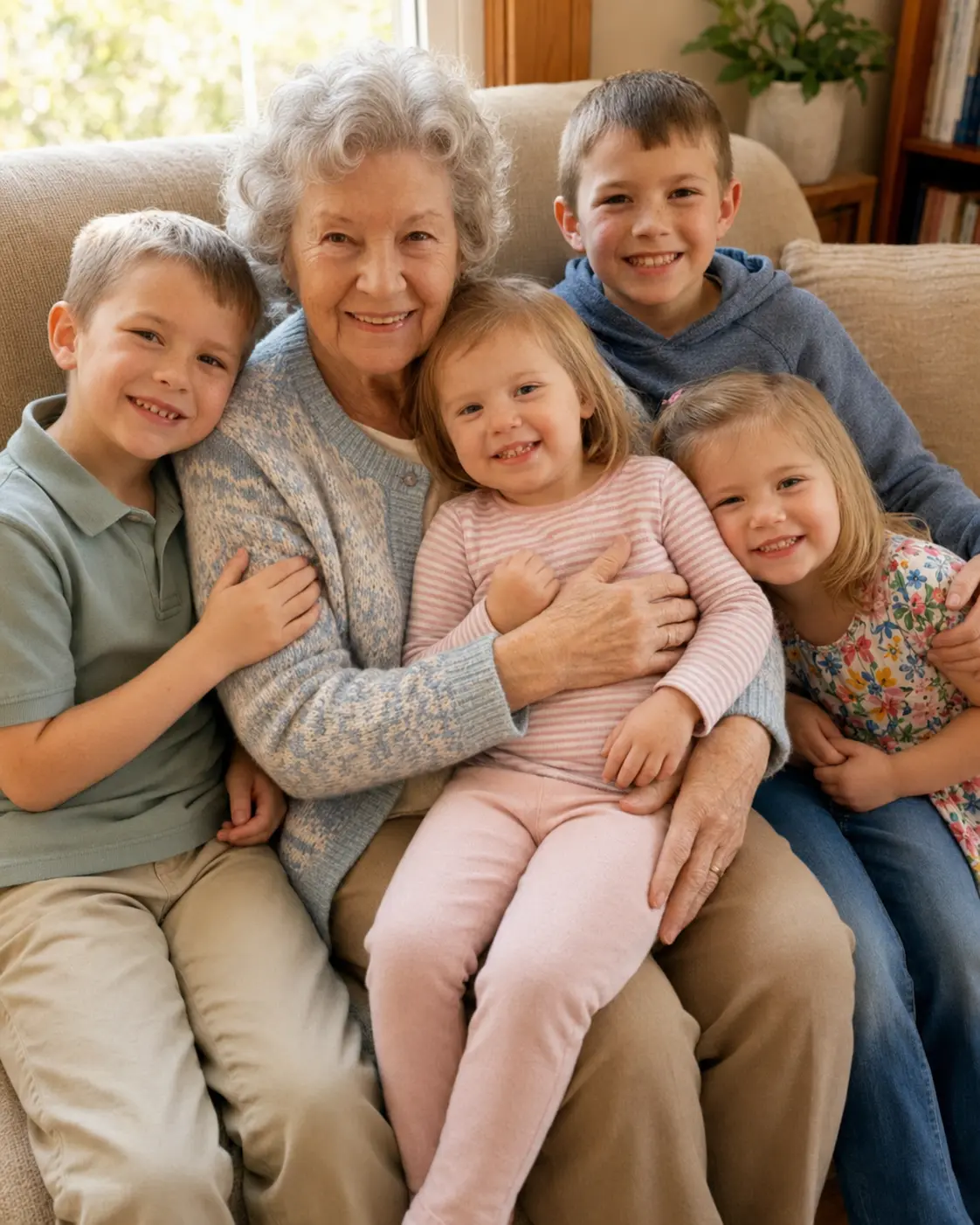
Without warning, I became a mother and a grandmother to four confused children who could not understand why their parents were not returning home. Lily was nine, Ben was seven, Molly was five, and little Rosie had only recently turned four.
I became both mother and grandmother to four children.
Lily, Ben, and Molly were old enough to understand that something terrible had happened. Rosie was different. She continued waiting for her parents, convinced that they would eventually walk back through the front door.
At first, I had no idea what to say to her. How could anyone explain death to a child who was only four?
Whenever Rosie asked where her mommy was, I held her close and said, “She has gone on a very long journey, sweetheart. But Grandma is here with you, and I will always stay.”
It was a lie spoken with love.
At that time, it felt like the only thing I could say without completely breaking her little heart.
It was a lie spoken with love.
The first several weeks were almost impossible to survive.
The children cried themselves to sleep. Lily barely touched her food. Ben began wetting the bed again, even though he had not done it for years.
I felt as though I were sinking. My pension could not cover the expenses of raising four children, so I had no choice but to find work again.
At 71, very few people were willing to employ me. Eventually, I found a position at a small diner on Route 9. I cleaned tables, washed dishes, and served customers. At night, I knitted scarves and hats that I sold at the weekend market to earn a little more money.
It was not an impressive life, but it brought in just enough to keep food on the table and a roof over our heads.
At 71, very few people were willing to employ me.
Each morning, I drove the three older children to school and left Rosie at daycare. I then worked until two in the afternoon, collected them, prepared dinner, helped with homework, and read stories before bed.
Six months passed in that routine. Slowly and painfully, we began creating a new kind of normal. The sadness never disappeared. It simply became quieter and learned to remain in the background.
Every day, I reminded myself that I was doing everything I could. Keeping the children safe, warm, and fed had to be enough.
Still, a small voice inside me constantly asked whether I was failing my grandchildren.
The sadness never disappeared.
One morning, I dropped the children off just as I usually did.
I was already halfway to the diner when I realized that I had left my purse at home. I turned the car around and drove back.
A few moments after entering the house, someone knocked on the front door. Looking through the window, I noticed a delivery truck in my driveway and a man dressed in a brown uniform standing on the porch.
“Are you Carolyn?” he asked when I opened the door.
“Yes?”
“We have a delivery for you. The package is extremely large and heavy. We can carry it inside for you.”
“What package?”
“We have a delivery for you.”
He pointed toward the truck. Two other men were struggling to remove something from the back. The package was enormous, almost the size of a small refrigerator, and completely covered in thick brown paper.
There was only one message written on the label:
“To My Mom.”
My home address appeared underneath it, but there was no sender’s name.
All three men were needed to bring the package into my living room. After placing it carefully on the floor, they left.
I slowly sliced through the tape and lifted the first flap.
A sealed envelope was resting directly on top.
The package was enormous.
I picked up the envelope. My name was written across the front in handwriting I immediately recognized.
It was Darla’s.
My hands began shaking as I sat on the couch and opened it.
The letter had been written three weeks before her death. The first sentence made my heart feel as though it had stopped.
“Mom, I know you must be confused. But if this package has reached you, it means I am no longer alive.”
I struggled to breathe, but I forced myself to continue reading.
“There are parts of my life you never knew about. I need you to understand the truth. Everything will become clear when you open the package.”
The letter had been written three weeks before her death.
I lowered the letter and stared at the enormous box.
What had Darla placed inside it? What truth had she hidden from me?
I thought about every conversation we had shared during the months before the accident.
She had often appeared exhausted and distracted. At the time, I assumed her job was causing too much stress. Now, I wondered whether there had been signs I had failed to notice.
With great care, I opened the remaining flaps.
Dozens of smaller boxes had been arranged inside.
What had Darla placed inside it?
Every box had a handwritten label. One was marked for Lily’s tenth birthday. Another was for Ben’s first day of middle school. One was meant for the day Molly learned to ride a bicycle, and another was for Rosie’s fifth birthday.
There were gifts for birthdays, graduations, achievements, and important moments throughout their childhood, continuing until each child reached the age of 18.
Darla had prepared for everything. Somehow, she had known that she would not be there.
A cold feeling moved through me. How could she possibly have known, and how long had she known it?
At the very bottom of the package, I discovered another envelope.
A second letter was inside.
Darla had prepared for everything.
“Mom, I am sorry I could not tell you earlier. I was trying to protect something. Please go to the address written below. He will explain everything.”
Underneath the message was an address in a city almost two hours away.
I checked the clock. It was already 9:30 in the morning, and my shift began at ten.
But I could not possibly go to work after reading those words. I made my decision immediately. Whatever Darla had hidden, I needed to uncover it. I owed that to her, and I owed it to her children.
I telephoned my manager and explained that I had a family emergency. He was clearly unhappy, but he allowed me to take the day off. I grabbed my keys, locked the house, and climbed into my car. Whatever I was about to learn, I was determined to face it.
Whatever Darla had hidden, I needed to uncover it.
The address brought me to a modest house near the outskirts of the city. I walked to the front door and knocked.
A man who appeared to be in his late thirties answered.
“May I help you?”
“My name is Carolyn. I am Darla’s mother. A package arrived at my house this morning, and it contained this address.”
His expression changed the moment he heard my name.
“Carolyn? Yes, of course. Please come inside. I have been waiting for you.”
I followed him into the house.
The address brought me to a modest house.
“My name is William,” he explained. “I was your daughter’s doctor.”
“Her doctor?”
He pointed toward the couch.
“Please sit down.”
William took a seat opposite me and opened a folder.
“Your daughter was diagnosed with stage-four cancer approximately one year ago.”
Everything inside me suddenly became silent.
“What did you say?”
“She came to me after noticing several symptoms. We carried out tests, and the results showed an aggressive form of cancer. We estimated that she had less than a year to live.”
I could not find the words to respond.
“I was your daughter’s doctor.”
“She purchased the gifts in that package over several months. She wanted each child to receive something from her during every major event in their life.”
“Why did she never tell me?”
“She wanted to tell you. But she said you had already suffered through too much in your life. She could not bear the thought of making you watch her slowly become weaker. She instructed me to send the package one week before Lily’s birthday so that you would have time to prepare.”
“She could not bear the thought of making you watch her slowly become weaker.”
I looked directly at him.
“Lily’s birthday is next week.”
“I know. That is why I arranged the delivery.”
He reached beside his chair and handed me a small box.
“She also wanted you to receive this.”
I lifted the lid. Inside was a beautiful and delicate gold locket.
I opened the locket.
A photograph had been placed inside.
It showed all four children with their arms wrapped around me. The picture had been taken during our trip to the lake the previous summer. We were all laughing and smiling.
Darla had been standing behind the camera.
He had handed me a small box.
At that moment, I completely broke down.
William remained silent and allowed me to cry.
After some time, I wiped my face and managed to ask another question.
“Did her husband know about the cancer?”
“No,” William answered. “She had not told him. She intended to divorce him after they returned from the business trip. He knew nothing about her illness or her plans. The plane crash happened before she had the opportunity to explain anything.”
“Did her husband know about the cancer?”
I drove home feeling numb. One question kept circling through my mind.
Why had Darla arranged for the package to come directly to me instead of her husband? At the time she planned it, he had still been alive.
Something about it did not make sense.
Unless there was another secret, something she had never revealed to William.
When I reached home, I carefully read the letter again.
At the very bottom of the page, written in much smaller letters, I noticed one final sentence.
“Some truths are better left buried. Please take care of the children, Mom.”
What was she trying to tell me?
I pulled the package into my bedroom and locked the door behind me.
Unless there was another secret.
That evening, I tried to behave normally around the children, but my thoughts would not slow down.
I repeatedly replayed William’s words and every line Darla had written.
Something was still missing. There had to be another part of the truth that I had not yet discovered.
After the children went to sleep, I noticed Molly holding tightly to her drawing book. She rarely allowed anyone to look through it. I had always assumed it was simply something important to her.
While I was tucking her into bed, the book slipped from her hands and landed on the floor. It opened to one of her drawings.
When I picked it up, I froze.
She rarely allowed anyone to look through it.
The picture showed a family.
There were four stick-figure children and two adults identified as “Mommy” and “Daddy.”
But beside Daddy, Molly had drawn another woman.
Underneath the second woman, she had written:
“Mommy 2.”
I did not sleep at all that night.
I remained in my bedroom, staring at the drawing and wondering who “Mommy 2” could possibly be.
The following morning, while the children were eating breakfast, I tried to ask Molly about the picture without frightening her.
Who was “Mommy 2”?
“Sweetheart, who is the woman you called Mommy 2 in your drawing?”
Molly looked up from her bowl of cereal.
“She is the lady who used to visit our house when Mommy was working.”
“What lady?”
“The lady Daddy used to hug.”
“Did Mommy know she was visiting?”
“I don’t know. But one day, Mommy shouted at them. After that, the lady stopped coming.”
“Did Mommy know she was visiting?”
I spent the following two days searching for answers. If my son-in-law had betrayed my daughter, I needed to uncover the truth.
I called one of Darla’s neighbours and asked whether she remembered anyone who had worked as a nanny for the family.
“Oh, you must mean Jessica,” the neighbour replied. “She was around for quite a long time. Then she suddenly disappeared. I assumed Darla had dismissed her.”
“Do you know why Darla dismissed her?”
“I do not like spreading rumours,” she said. “But I once saw Jessica with Darla’s husband. The way they were behaving did not look professional.”
The neighbour gave me Jessica’s contact details, and I drove directly to her apartment.
I spent the following two days searching for answers.
Jessica appeared nervous when she opened the door.
“Carolyn? Darla’s mother?”
“You recognise me?”
“I saw photographs of you in Darla’s house.”
“I know what happened between you and my son-in-law,” I said.
Jessica lowered her eyes.
“I am sorry.”
“How long did it continue?”
“About six months. It started after I had already worked for their family for a year.”
“How long did it continue?”
“My daughter discovered the affair, didn’t she?”
Jessica nodded while staring at her hands.
“She walked into the house and found us together. She fired me immediately.”
“Did he love you?”
Jessica looked up. Tears were gathering in her eyes.
“I honestly do not know. I think he was simply lonely.”
“He had a wife and four children waiting for him. He was not lonely. He was selfish.”
Then I turned around and left.
“He was not lonely. He was selfish.”
When I returned home, I sat in my bedroom and looked at the enormous package.
At last, the pieces began to fit together.
Darla had not told her husband about the cancer because she no longer trusted him. She had arranged for me to receive the gifts because she wanted someone reliable to protect them.
She had also wanted to preserve her children’s memories of their father. Even after everything he had done, she did not want them to grow up hating him.
She wanted the truth buried.
Finally, I understood her decision, and I made one of my own.
I would never tell the children about their father’s betrayal.
They had already lost more than any child should have to lose. Darla had trusted me to carry the painful truth so that they would not have to.
I would carry that burden for her.
Finally, I understood.
That weekend, we celebrated Lily’s tenth birthday.
I went to the package and removed the box marked:
“For Lily’s 10th Birthday.”
Lily slowly opened it. Inside was a beautiful journal. On the first page, Darla had written a message in her familiar handwriting.
“My precious Lily, I am so proud of the young woman you are becoming. Fill these pages with your hopes and dreams. Wherever you go, I will always be cheering for you.”
Lily pressed the journal against her chest and began crying.
I cried with her.
My daughter had left behind far more than a collection of presents.
She had also left me with the most painful lesson I had ever learned:
Sometimes love means protecting people, even from the painful truth about someone they once loved.
My daughter had left behind far more than a collection of presents.
Has this story reminded you of an experience from your own life? Share your thoughts in the Facebook comments.
Here is another emotional story:
My mother passed away one year before my wedding. On the morning I was supposed to say, “I do,” her lawyer arrived with an envelope she had left behind for me. Inside was a USB drive containing a recorded message. What my mother revealed in that video changed everything I believed about my childhood, my future, and the man I was preparing to marry.
More stories : Blind Twins’ Mother Returns After 18 Years With One Shocking Demand
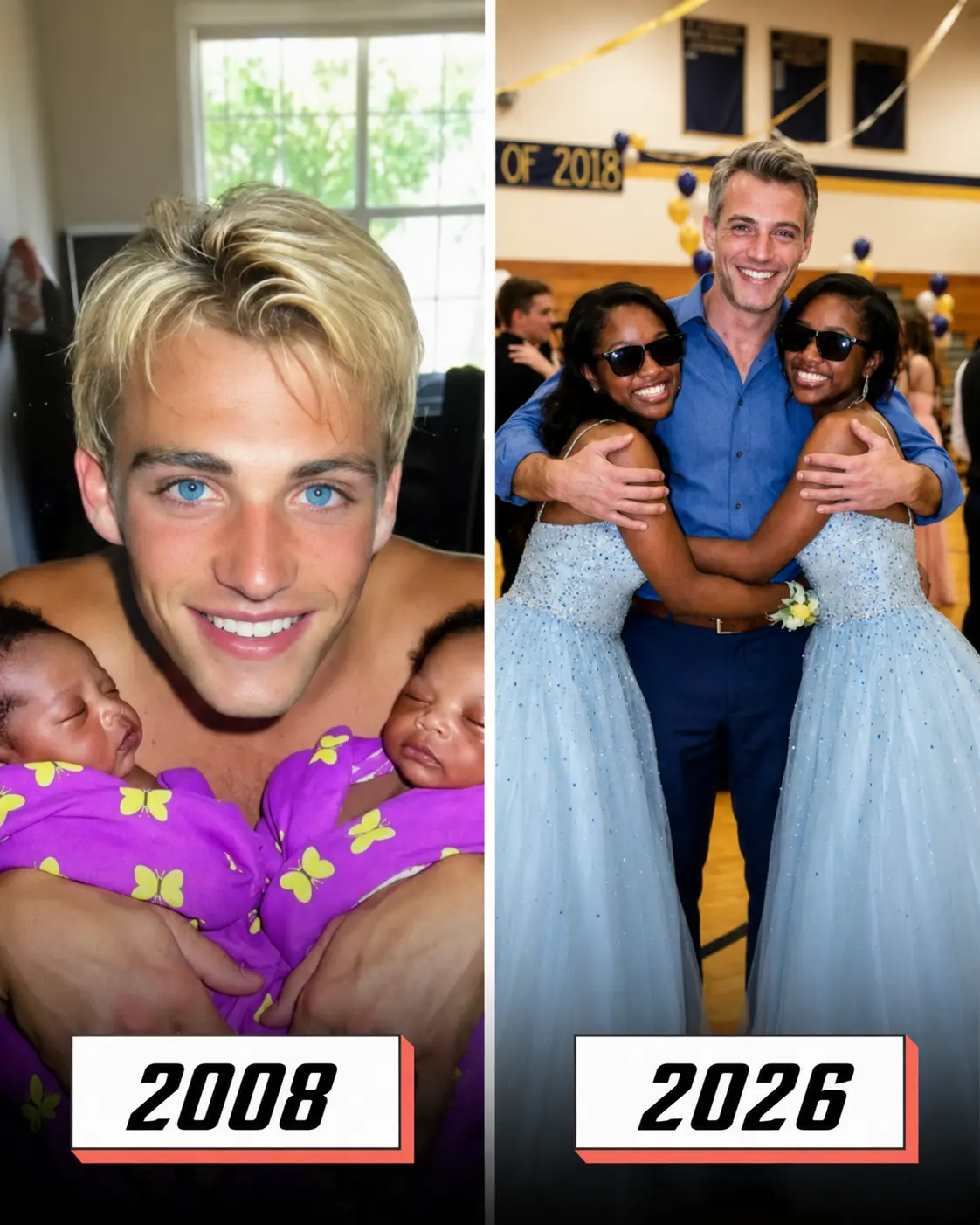
My Wife Left Me With Our Blind Newborn Twins — 18 Years Later, She Returned With One Cruel Condition
Blind twins’ mother returns after 18 years, but her shocking demand reveals the truth about family, sacrifice, and the father who never left.
Eighteen years ago, my wife walked away from me and our blind newborn twin daughters to chase her own dreams. I raised them alone, teaching them how to sew and building a life from almost nothing. Last week, she returned with expensive gowns, money, and one condition that made my entire body go cold.
My name is Mark, and I’m 42 years old. Last Thursday changed everything I believed about forgiveness, family, and the people who don’t deserve another chance.
Eighteen years ago, my wife Lauren left me with our newborn twin daughters, Emma and Clara. Both girls were born blind. The doctors delivered the news gently, almost as if they were apologizing for something they couldn’t fix.
But Lauren didn’t see two beautiful babies who needed love.
She saw a future she never wanted.
Three weeks after we brought the girls home, I woke up to an empty bed and a note sitting on the kitchen counter.
“I can’t do this. I have dreams. I’m sorry.”
That was all.
No goodbye.
No explanation.
No promise to return.
Just a woman choosing her own future over two newborn babies who needed their mother.
Life became endless bottles, sleepless nights, and learning how to raise children in a world that wasn’t built for them.
I had no idea what I was doing most days. I read every book I could find about raising children with visual impairments. I learned braille before they could even speak. I changed our apartment so they could move safely, remembering every corner, every piece of furniture, every possible obstacle.
And somehow, we survived.
But surviving was never enough for me.
I wanted my daughters to have a life full of confidence, dreams, and happiness.
When the girls were five years old, I taught them how to sew.
At first, it was simply a way to help them develop coordination and understand different textures. But slowly, it became something much bigger.
Emma had an incredible ability to recognize fabrics by touch alone. She could run her fingers across material and immediately tell what it was.
Clara had a natural gift for patterns and structure. She could imagine a design in her mind and create it with her own hands.
Our small living room became our workshop.
Fabric covered the tables. Threads filled the shelves. The sound of our sewing machine became part of our everyday life as we created dresses, costumes, and designs together.
We built a world where blindness was not something that limited them.
It was simply one part of who they were.
The girls grew into strong, independent young women. They moved through school with confidence. They made friends who saw their personalities instead of their disability. They laughed, dreamed, and created beautiful things.
And they never asked about their mother.
I never wanted them to feel abandoned.
I wanted them to understand that her absence was her decision, not their fault.
“Dad, can you help me with this hem?” Emma called one evening from the sewing table.
I walked over and guided her fingers toward the uneven section of fabric.
“Feel that? Smooth this part before you pin it.”
She smiled.
“Got it.”
Clara looked up from her project.
“Dad, do you think we’re good enough to sell these someday?”
I looked at the gowns they created with their own hands.
“You’re more than good enough,” I told them. “You’re amazing.”
Then last Thursday morning, everything changed.
The girls were working on new designs, and I was making coffee when someone knocked on the door.
I wasn’t expecting anyone.
When I opened it, Lauren was standing there.
The woman I had buried from my life eighteen years earlier.
She looked completely different.
Her hair was perfect. Her clothes looked expensive. Everything about her appearance screamed success.
She looked at our small apartment and smiled with disappointment.
“You’re still living like this?” she said.
I didn’t answer.
She walked inside as if she still belonged there.
Her eyes moved across the sewing table, the fabrics, and the life we had created without her.
“You’re still the same,” she said. “Still struggling. Still not understanding how to build something bigger.”
My hands tightened.
But I stayed silent.
Emma and Clara stopped sewing.
They couldn’t see her expression.
But they could hear the judgment in her voice.
“Dad?” Clara asked quietly. “Who is that?”
I took a deep breath.
“It’s your mother.”
The room went completely silent.
Lauren stepped forward.
“Girls, look at you. You’re grown up.”
Emma’s face remained calm.
“We can’t see, remember?”
Lauren froze.
“Right… I know. I just mean you’ve grown.”
Clara’s voice was cold.
“Funny. We haven’t thought about you either.”
I had never been prouder of them.
Lauren quickly changed direction.
“I came here because I want to give you something.”
She placed two expensive garment bags on the couch.
Then she placed an envelope filled with money beside them.
“These are designer gowns,” she said. “And this money can completely change your lives.”
Emma reached for Clara’s hand.
“Why?”
Lauren smiled.
“Because I want my daughters back.”
Then she placed a document on top of the envelope.
“But there is one condition.”
The room became completely still.
“What condition?” Emma asked.
Lauren smiled.
“You have to choose me over your father.”
My heart dropped.
She continued.
“You need to publicly admit that he failed you. That he kept you struggling. That I’m the one who can give you the future you deserve.”
I grabbed the document and read it.
It was a contract.
A contract saying Emma and Clara would reject me as their father and credit Lauren for their success.
“She wants you to give up your relationship with me,” I said quietly.
Clara’s expression changed.
“That’s horrible.”
Lauren shrugged.
“That’s reality.”
Emma slowly picked up the envelope.
“It is a lot of money,” she said.
Lauren smiled confidently.
But Emma continued.
“But we never needed it.”
The smile disappeared from Lauren’s face.
“We had something better.”
Clara stood beside her sister.
“We had a father who stayed.”
“A father who taught us.”
“A father who loved us when things were difficult.”
Emma looked toward where Lauren stood.
“We don’t want your money.”
“We don’t want your gowns.”
“And we don’t want you.”
Then Emma opened the envelope and threw the money into the air.
Bills scattered across the floor.
“You can keep it.”
“We’re not for sale.”
Lauren’s face changed completely.
“You have no idea what you’re rejecting!”
“I’m successful now!”
“I built a life!”
I looked at her.
“For yourself.”
Clara nodded.
“You didn’t come back for us.”
“You came back because you wanted people to believe you were a good mother.”
Lauren’s anger exploded.
“You think you’re better than me?”
“No,” I said.
“But we know who stayed.”
Lauren grabbed her things and walked toward the door.
“You’ll regret this.”
I looked at my daughters.
“No.”
“You will.”
She left.
The story spread online within hours.
Emma’s friend had been recording the entire moment through a video call. She posted it with one sentence:
“This is what real love looks like.”
The video went viral.
People heard the truth.
They heard about the abandonment.
They heard about the years I spent raising two daughters alone.
And they saw what real family looked like.
Lauren’s carefully created image collapsed.
Meanwhile, Emma and Clara received opportunities they never expected.
A major costume design program offered them scholarships after seeing their work.
Not because of their story.
Because of their talent.
Today, they are working on professional productions.
Yesterday, I watched Emma adjust a costume while Clara worked beside her.
A director walked over and smiled.
“Your daughters are incredibly talented.”
I smiled back.
“I know.”
That night, we sat together in our small apartment eating dinner and laughing.
The same apartment Lauren called a failure.
But to us, it was home.
Lauren chased fame.
We chose love.
And we found everything.
My daughters never needed designer gowns or expensive gifts.
They needed someone who stayed.
Someone who believed in them.
Someone who loved them exactly as they were.
Eighteen years later, Lauren tried to buy back a place in their lives.
But my daughters already knew the difference between something expensive and something priceless.
More stories : Pregnant Employee Fired by Boss — 7 Years Later, She Became His Boss

My Daughter’s Music Teacher Was My First Love and Her Real Father

Late Daughter’s Secret Letter Reveals a Truth Her Mother Never Knew

Blind Twins’ Mother Returns After 18 Years With One Shocking Demand

Pregnant Employee Fired by Boss — 7 Years Later, She Became His Boss

Daughter Introduces Biological Father After Dad Buys Her a House at Emotional Reunion
My Daughter’s Music Teacher Was My First Love and Her Real Father
I Discovered My Daughter’s Music Teacher Was My First Love, Then I Learned Why He Was Desperate to Be Part...
Late Daughter’s Secret Letter Reveals a Truth Her Mother Never Knew
At 71, I Took In My Four Orphaned Grandchildren. Six Months Later, a Giant Package Arrived With a Letter From...
Blind Twins’ Mother Returns After 18 Years With One Shocking Demand
My Wife Left Me With Our Blind Newborn Twins — 18 Years Later, She Returned With One Cruel Condition Blind...
Pregnant Employee Fired by Boss — 7 Years Later, She Became His Boss
My Boss Fired Me While I Was Five Months Pregnant. Seven Years Later, He Begged Me for a Janitor Job....
Daughter Introduces Biological Father After Dad Buys Her a House at Emotional Reunion
I Bought My Daughter a House, Then Her Housewarming Toast Redefined What “Father” Meant I purchased a house for my...


Missing Son’s Jacket Leads Mother to an Abandoned House
I Saw a Homeless Man Wearing My Missing Son’s Jacket, So I Followed Him to an Abandoned House Almost a...

Sgt. 1st Class Nicole Amor Dies Days Before Returning Home
Husband Speaks Out After Sgt. 1st Class Nicole Amor Dies Days Before Her Planned Return Home Sgt. 1st Class Nicole...

Hidden Camera in Daughter’s Room Reveals a Night Visitor
My Five-Year-Old Said “Mr. Tom” Visited After I Fell Asleep, So I Hid a Camera in Her Room My five-year-old...

Mother-in-Law Hidden Camera Reveals a Shocking Secret
My Mother-in-Law Insisted on Watching My Daughter Every Wednesday, So I Hid a Camera and Discovered Why When Martha’s mother-in-law...

Hidden Camera Catches Husband Cheating with the Nanny
I Hid a Camera and Caught My Husband with Our Daughter’s Nanny, Then I Pretended to Leave for a Week...
-

 Spiritual Meanings2 years ago
What is the spiritual significance of a baby born with teeth?
-

 Spiritual Meanings2 years ago
What is the spiritual significance of hearing a door slam?
-
 Dream Meanings2 years ago
What does it mean to dream about being in jail? Exploring the spiritual significance of imprisonment in dreams
-

 Spiritual Meanings2 years ago
The Symbolism of a Tree Branch Falling: A Sign from the Universe
-

 Spiritual Meanings3 years ago
What is the spiritual meaning of heart palpitations?