
Spiritual Meanings
What is the Spiritual Significance of Smelling Oranges?

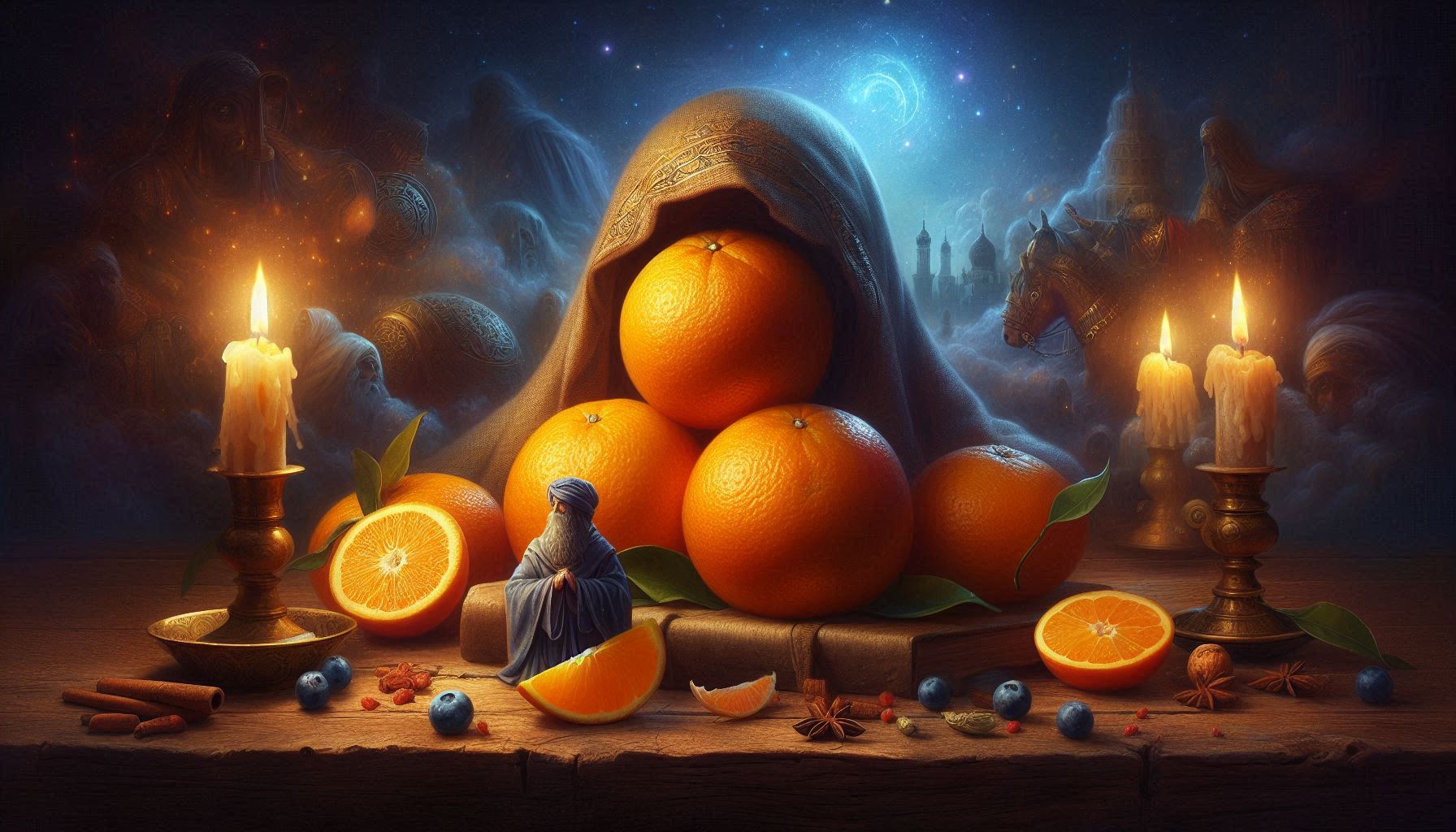
The Spiritual Significance of Smelling Oranges?
We will explore the spiritual significance of smelling oranges. Oranges have long been associated with various spiritual and symbolic meanings. From ancient times to modern-day practices, the aroma of oranges has played a significant role in cultural rituals, religious ceremonies, and personal spiritual experiences. We will delve into the history, symbolism, and importance of smelling oranges in the spiritual realm.
Why are oranges often used in spiritual practices?
Oranges have long been considered a symbol of abundance, prosperity, and good fortune in many cultures. The vibrant color and sweet aroma of oranges are believed to attract positive energy and blessings. In spiritual practices, oranges are often used to cleanse and purify the environment, inviting in positive energies while dispelling negative energies. The scent of oranges is also thought to enhance spiritual awareness, promote mental clarity, and uplift the mood.
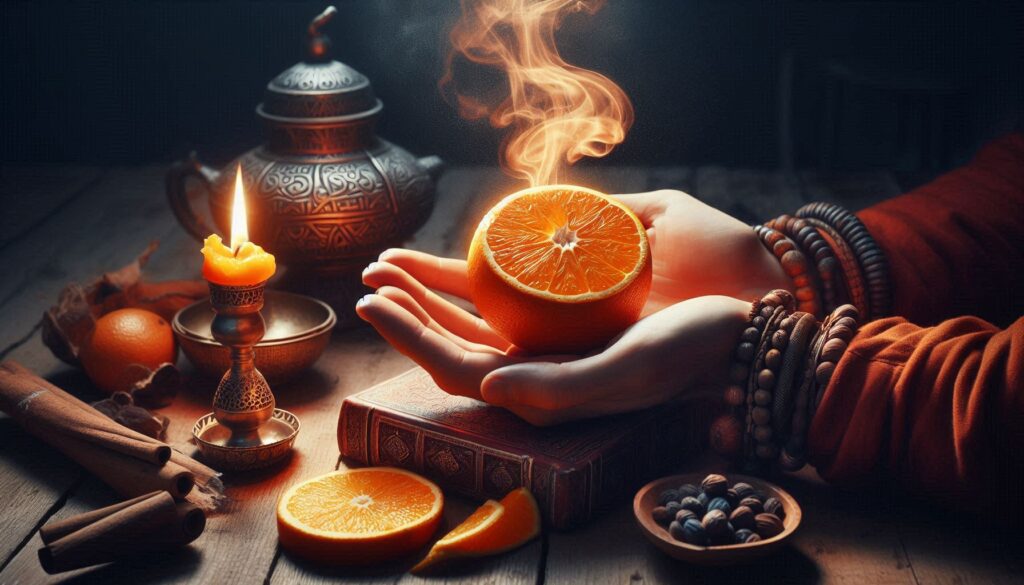
Additionally, oranges are rich in vitamin C, which is known for its immune-boosting properties. In some spiritual traditions, the healing properties of oranges are believed to protect against negative influences and promote physical and emotional well-being.
How can smelling oranges enhance spiritual experiences?
The act of smelling oranges can have a profound impact on the spiritual experience of an individual. The scent of oranges is often associated with feelings of joy, warmth, and positivity. By inhaling the aroma of oranges, one can create a sense of calm and inner peace, allowing for deeper meditation, reflection, and connection with the divine.
Furthermore, the scent of oranges is believed to stimulate the senses and awaken dormant spiritual energies within the body. This heightened awareness can lead to a deeper understanding of oneself, one’s surroundings, and the spiritual forces at play in the universe.
What spiritual symbolism is associated with oranges?
In various spiritual traditions, oranges are associated with different symbolic meanings. In Chinese culture, oranges are a symbol of good luck and prosperity. In Hinduism, oranges are offered as a sacred fruit in religious ceremonies and rituals. In Christian symbolism, oranges represent the fruits of the Spirit, such as love, joy, peace, and patience.
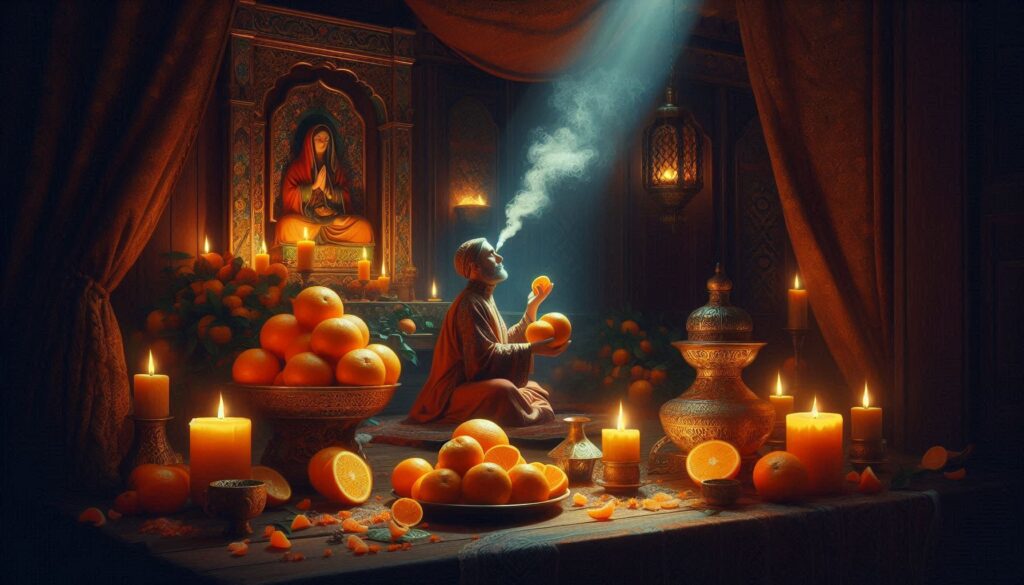
The circular shape of the orange is also seen as a symbol of wholeness, unity, and divine perfection. The bright color of the fruit symbolizes vitality, creativity, and spiritual enlightenment. Overall, oranges are considered a powerful symbol of spiritual growth, transformation, and renewal.
How can one incorporate the scent of oranges into their spiritual practice?
There are numerous ways to incorporate the scent of oranges into your spiritual practice. You can place fresh oranges or orange-scented essential oils in your meditation space to enhance relaxation and focus. Burning orange-scented candles or incense can create a soothing ambiance and promote spiritual healing.
You can also add a few drops of orange essential oil to a carrier oil and use it for aromatherapy massage or as a natural perfume. Drinking orange-infused water or tea can also help clear the mind, uplift the spirit, and rejuvenate the body. By incorporating the scent of oranges into your daily spiritual rituals, you can enhance your spiritual connection, increase your energy levels, and foster a sense of well-being.
Also read : What does it mean spiritually when a cat sleeps above my head?
Conclusion
In conclusion, the spiritual significance of smelling oranges is multifaceted and profound. The aroma of oranges has long been associated with abundance, prosperity, positivity, and spiritual growth. By incorporating the scent of oranges into your spiritual practice, you can enhance your spiritual experiences, promote healing and well-being, and deepen your connection with the divine.
FAQs
1. Can smelling oranges help with stress relief?
Absolutely, the sweet aroma of oranges is known to have calming and stress-relieving properties. Inhaling the scent of oranges can help relax the mind, reduce anxiety, and promote a sense of peace and well-being.
2. Are there any spiritual rituals or traditions that involve the use of oranges?
Yes, oranges are used in various spiritual traditions and rituals around the world. From offering oranges as a sacred fruit in Hindu ceremonies to incorporating oranges into shamanic healing practices, the fruit holds a special significance in many spiritual cultures.
3. How can I benefit from incorporating the scent of oranges into my daily routine?
By incorporating the scent of oranges into your daily routine, you can enhance your spiritual connection, boost your mood, and promote physical and emotional well-being. The sweet aroma of oranges can uplift your spirits, increase your energy levels, and create a sense of peace and harmony in your surroundings.
4. Are there any precautions to take when using orange essential oils for aromatherapy?
It is important to dilute orange essential oil with a carrier oil before applying it to the skin, as it can be irritating in its concentrated form. Pregnant women, children, and individuals with sensitive skin should consult a healthcare professional before using orange essential oil for aromatherapy.
5. What other scents are commonly used in spiritual practices?
Other common scents used in spiritual practices include lavender, frankincense, rosemary, and sandalwood. Each scent carries its own unique spiritual significance and can be used to enhance different aspects of the spiritual experience.







Spiritual Meanings
My 81-year-old mother replaced her caregiver with a heavily tattooed biker, and the reason left me completely stunned

My 81-year-old mother replaced her caregiver with a heavily tattooed biker, and the reason left me completely stunned
For twelve years, Margaret’s world revolved around caring for her bedridden mother. Between full-time work and constant responsibility at home, her days faded into exhaustion, with only small pieces of routine shared with Brenda, the trusted caregiver who kept things steady.
One morning, Brenda mentioned that Margaret’s mother had started asking for private time and behaving oddly secretive. Margaret brushed it aside at first, because her mother had been bedridden for years and relied heavily on familiar routines.
Two months later, Brenda called in distress, saying she had been dismissed and replaced by another caregiver. She would not explain much, only warning Margaret that she might be shocked when she saw who had taken her place.
When Margaret arrived home, she found a large tattooed man in a leather vest sitting beside her mother’s bed, gently feeding her soup. Despite his intimidating look, her mother seemed calm, relaxed, and almost happy.
After sending him outside, Margaret confronted her mother, demanding to know who he was and why Brenda had been fired. Her mother insisted the man, Louis, was staying and that he was now her caregiver. She refused to explain more.
Over time, Margaret watched Louis closely, still suspicious of his presence and intentions. Yet instead of danger, she saw patience, steadiness, and care. He tended to her mother gently, and her mother slowly improved in mood and energy. Still, Margaret felt increasingly shut out, especially when every conversation stopped the moment she entered the room.
Eventually, her mother suffered a sudden medical emergency and was taken to the hospital. Though doctors connected it to her existing condition, Margaret struggled to separate fear from suspicion toward Louis. He remained beside her mother constantly, which only deepened her uncertainty.
After her mother fell asleep one night, Margaret offered Louis money to leave. He refused to answer and walked away. Outside the hospital, he finally told her that he could no longer keep silent about the truth.
He revealed that decades earlier, Margaret’s mother had given birth to a son as a young woman and had been forced to give him up for adoption. That son, Louis, had found her only recently and returned to her life at her request. He explained that her mother wanted private time with him before revealing the truth to her family.
Inside the hospital room, Margaret’s mother admitted her past with deep shame and explained her fear of losing both her newly found son and her daughter. The confession broke years of silence and misunderstanding between them.
In the end, Margaret chose not to turn Louis away. She allowed him to remain part of their lives, realizing that family connections can appear in unexpected forms and are not always defined by the roles people first assume.
More stories : After being called the world’s ugliest woman, her incredible comeback shocked the world

The Hidden Meaning Behind the “M” and Crescent Moon on Your Palm
The lines on the human palm have fascinated people for centuries. To science, they are natural skin patterns formed by movement, growth, and genetics. But across many cultures, these lines have also been seen as something more symbolic a quiet map of personality, inner strength, and possible life direction.
This belief is known as palmistry, or chiromancy. It has appeared in ancient traditions from India and Greece and continues to attract curiosity even today. While not everyone believes palm lines can reveal destiny, many people are still drawn to the idea that the hand may carry hidden meaning.
Among the most interesting palm markings is the mysterious “M” shape. This shape is believed to appear when the major lines of the palm connect in a certain way. These main lines usually include the Life Line, Heart Line, Head Line, and Fate Line.
In palmistry, the Life Line is linked with vitality and life energy. The Heart Line is connected with emotions, love, and relationships. The Head Line is associated with intelligence, thinking, and decision-making. The Fate Line is often believed to represent direction, purpose, and outside influences that shape a person’s path.
When these lines form a clear “M” shape, palmists often interpret it as a sign of strong intuition and determination. People with this marking are believed to be sharp-minded, focused, and naturally aware of opportunities around them. They are often described as individuals who can trust their instincts while still making practical decisions.
The “M” is also linked with leadership and self-reliance. In palmistry traditions, it may suggest a person who does not easily give up when life becomes difficult. Instead, they may use challenges as motivation to grow, rebuild, and move forward with stronger purpose.
Another marking that attracts attention is the crescent moon shape. This is usually connected to the lower part of the palm, often called the Mount of Luna. In palmistry, this area is associated with imagination, emotions, dreams, and the inner world.
A crescent moon marking is often linked with creativity and sensitivity. People with this sign are believed to have deep thoughts, strong feelings, and a powerful connection to intuition. They may be drawn to artistic ideas, emotional understanding, or quiet reflection.
When the “M” shape and crescent moon appear together, palmists see it as a meaningful combination. The “M” is connected with practical strength, discipline, and clear direction. The crescent moon is connected with imagination, emotion, and inner awareness.
Together, they are believed to represent balance — the ability to think logically while still listening to inner feelings. Some interpret this as a sign of personal growth, transformation, and the courage to move beyond old limitations.
Palmistry does not depend on one symbol alone. The shape of the fingers, texture of the palm, smaller markings, and overall hand structure are also considered important. Each hand is viewed as unique, with different signs combining to create a fuller interpretation.
Whether someone sees palmistry as belief, tradition, or simple curiosity, markings like the “M” and crescent moon continue to capture attention. They remind people of a deeper human desire to understand themselves, their strengths, and the path they are walking.
More stories : From Homelessness to High Fashion — The Woman the World Forgot Finally Saw Herself Again

The spiritual significance of the common starling?
we will explore the spiritual significance of the common starling, a bird known for its striking appearance and behavior. We will delve into the symbolism and meanings associated with the common starling in various spiritual traditions and how it can serve as a powerful guide and messenger in our spiritual journey.
What is the spiritual significance of the common starling?
The common starling, also known as the European starling, holds deep spiritual significance in various cultures and belief systems. In many spiritual traditions, birds are considered to be messengers from the divine, bridging the gap between the earthly realm and the spiritual realm. The common starling, with its glossy black plumage and iridescent sheen, is often seen as a symbol of magic, mystery, and spiritual connection.

In Celtic mythology, the starling is associated with transformation and shape-shifting, symbolizing the ability to adapt to changing circumstances and embrace new beginnings. The starling’s murmurations, where thousands of birds move together in synchronized harmony, are seen as a powerful metaphor for unity, cooperation, and collective consciousness.
How can the common starling guide us on our spiritual journey?
For those who resonate with the spiritual significance of the common starling, the bird can serve as a guiding light on their spiritual path. The starling’s adaptability and resilience can inspire us to embrace change and transformation in our own lives, trusting in the divine guidance that is always present.
When we observe the starling’s murmurations, we are reminded of the power of unity and collective consciousness. We are encouraged to connect with others in a spirit of cooperation and harmony, recognizing that we are all interconnected and part of a larger whole. The starling can also remind us to trust in our intuition and inner wisdom, following the path that resonates with our true purpose and passion.
What are the symbolic meanings of the common starling in different spiritual traditions?
In Native American spirituality, the common starling is often seen as a symbol of communication and connection with the spirit world. The bird’s melodious songs and vocal mimicry are believed to carry messages from the ancestors and spirit guides, guiding and protecting the tribe.

In Chinese culture, the common starling is associated with good luck and prosperity. The bird’s ability to mimic sounds is seen as a sign of intelligence and adaptability, qualities that are highly valued in Chinese philosophy and folklore.
In Hinduism, the common starling is considered to be a sacred messenger from the gods, carrying blessings and divine guidance to those who are open to receiving them. The bird’s graceful flight and melodious songs are seen as manifestations of the divine presence in the natural world.
How can we connect with the spiritual energy of the common starling?
To connect with the spiritual energy of the common starling, we can spend time in nature, observing the bird in its natural habitat and listening to its songs. We can also meditate on the symbolism and meanings associated with the common starling, reflecting on how it resonates with our own spiritual journey.
Creating artwork or crafts inspired by the common starling can also help us connect with its energy and wisdom. By incorporating the bird’s symbolism into our daily lives, we can invite its guidance and protection into our hearts and homes, fostering a deeper connection with the spiritual realm.
What does it mean if a common starling crosses your path?
Seeing a common starling cross your path can be a powerful omen or message from the universe. In many spiritual traditions, birds are seen as messengers from the divine, bringing guidance and blessings to those who are open to receiving them. If a common starling crosses your path, it may be a sign that you are being called to embrace change and transformation in your life, trusting in the divine guidance that is always present.

Pay attention to any thoughts or feelings that arise when you encounter a common starling, as they may hold valuable insights and messages for you on your spiritual journey. Take the time to connect with the bird’s energy and symbolism, allowing it to guide you towards greater clarity, purpose, and spiritual growth.
Also read : The Spiritual Significance of October in the Bible
Conclusion
In conclusion, the common starling carries deep spiritual significance in various cultures and belief systems, symbolizing transformation, unity, and divine guidance. By connecting with the energy and symbolism of the common starling, we can tap into its wisdom and power, guiding us on our spiritual journey towards greater self-awareness and connection with the divine.
FAQs
1. Can the common starling bring good luck?
Yes, in Chinese culture, the common starling is associated with good luck and prosperity due to its intelligence and adaptability.
2. How can I connect with the spiritual energy of the common starling?
To connect with the spiritual energy of the common starling, spend time in nature observing the bird, meditate on its symbolism, and create artwork inspired by the bird.
3. What does it mean if a common starling crosses my path?
Seeing a common starling cross your path may be a sign of change and transformation in your life, urging you to trust in divine guidance.
4. How can the common starling guide me on my spiritual journey?
The common starling can guide you by inspiring adaptability, unity, and connection with the divine, encouraging you to embrace change and trust your intuition.
5. Are there any specific rituals or practices associated with the common starling in spirituality?
While there are no specific rituals or practices associated with the common starling, you can incorporate the bird’s symbolism into your daily life through meditation, observation, and creative expression to connect with its spiritual energy.

My Daughter’s Music Teacher Was My First Love and Her Real Father

Late Daughter’s Secret Letter Reveals a Truth Her Mother Never Knew

Blind Twins’ Mother Returns After 18 Years With One Shocking Demand

Pregnant Employee Fired by Boss — 7 Years Later, She Became His Boss

Daughter Introduces Biological Father After Dad Buys Her a House at Emotional Reunion

My Daughter’s Music Teacher Was My First Love and Her Real Father
I Discovered My Daughter’s Music Teacher Was My First Love, Then I Learned Why He Was Desperate to Be Part...

Late Daughter’s Secret Letter Reveals a Truth Her Mother Never Knew
At 71, I Took In My Four Orphaned Grandchildren. Six Months Later, a Giant Package Arrived With a Letter From...

Blind Twins’ Mother Returns After 18 Years With One Shocking Demand
My Wife Left Me With Our Blind Newborn Twins — 18 Years Later, She Returned With One Cruel Condition Blind...

Pregnant Employee Fired by Boss — 7 Years Later, She Became His Boss
My Boss Fired Me While I Was Five Months Pregnant. Seven Years Later, He Begged Me for a Janitor Job....

Daughter Introduces Biological Father After Dad Buys Her a House at Emotional Reunion
I Bought My Daughter a House, Then Her Housewarming Toast Redefined What “Father” Meant I purchased a house for my...


Missing Son’s Jacket Leads Mother to an Abandoned House
I Saw a Homeless Man Wearing My Missing Son’s Jacket, So I Followed Him to an Abandoned House Almost a...


Sgt. 1st Class Nicole Amor Dies Days Before Returning Home
Husband Speaks Out After Sgt. 1st Class Nicole Amor Dies Days Before Her Planned Return Home Sgt. 1st Class Nicole...


Hidden Camera in Daughter’s Room Reveals a Night Visitor
My Five-Year-Old Said “Mr. Tom” Visited After I Fell Asleep, So I Hid a Camera in Her Room My five-year-old...


Mother-in-Law Hidden Camera Reveals a Shocking Secret
My Mother-in-Law Insisted on Watching My Daughter Every Wednesday, So I Hid a Camera and Discovered Why When Martha’s mother-in-law...


Hidden Camera Catches Husband Cheating with the Nanny
I Hid a Camera and Caught My Husband with Our Daughter’s Nanny, Then I Pretended to Leave for a Week...
-

 Spiritual Meanings2 years ago
What is the spiritual significance of a baby born with teeth?
-

 Dream Meanings2 years ago
What does it mean to dream about being in jail? Exploring the spiritual significance of imprisonment in dreams
-

 Spiritual Meanings2 years ago
What is the spiritual significance of hearing a door slam?
-

 Spiritual Meanings2 years ago
The Symbolism of a Tree Branch Falling: A Sign from the Universe
-

 Spiritual Meanings2 years ago
What is the spiritual meaning of heart palpitations?